Oct 7, 2026News & Insights
Custom Charging Cables with Logo: A Buyer's Guide
Factory guide to custom charging cables with logo: connector options, materials, logo processes, QC checkpoints, and OEM steps for promotional buyers.
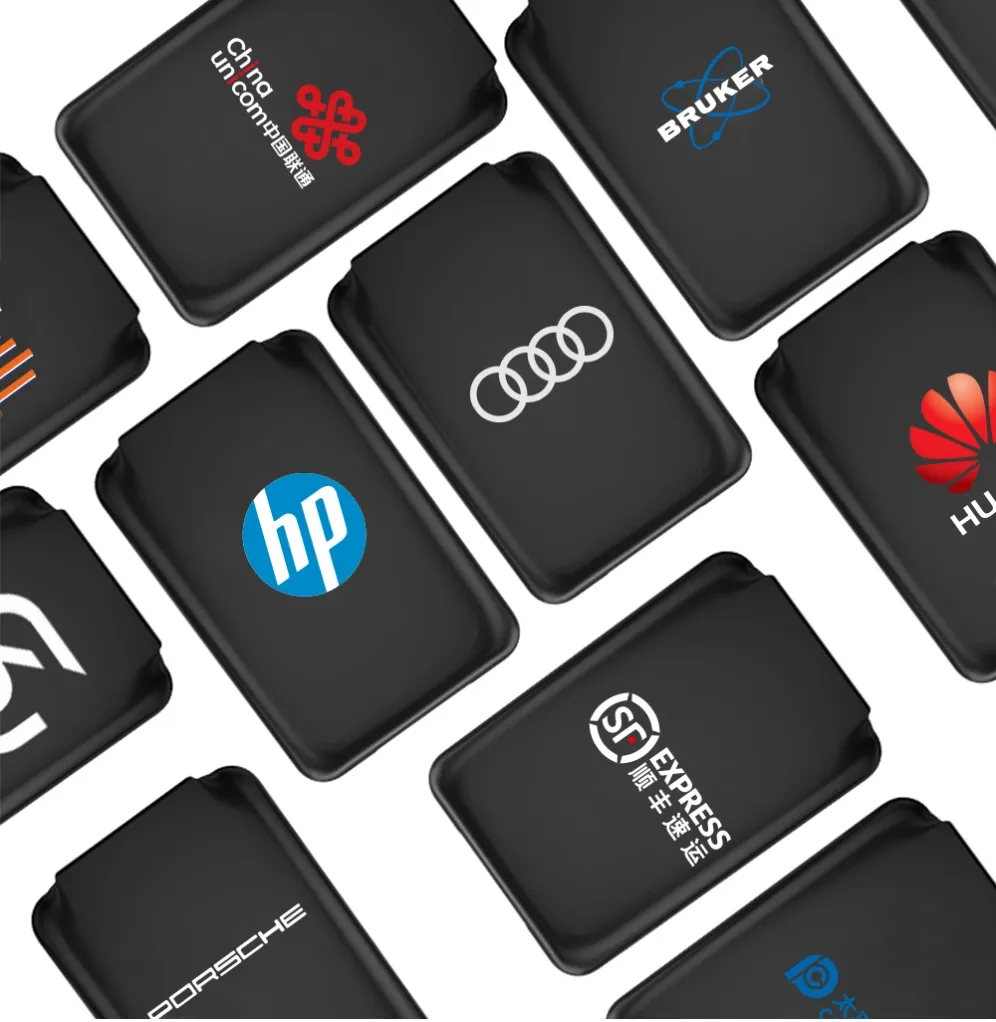
Among promotional tech products, charging cables occupy a rare position: recipients pick them up and plug them in every day. A pen drifts between drawers; a cable stays within arm's reach — on the desk, in the laptop bag, clipped to a keyring. For distributors and corporate gift buyers, that daily handling turns a low-cost item into months of brand exposure.
It also raises the stakes: a cable is a working tool, not a keepsake. If it charges slowly, frays early, or sheds its logo within a month, it reflects on the brand that gave it away. This guide walks through the decisions that matter — format, electrical specs, materials, logo processes, and pre-order quality checks — from the factory side, the same questions an OEM/ODM team asks before quoting custom charging cables with logo.
Mapping the Category: Which Format Fits Your Campaign
"Charging cable" is an umbrella term. The format you choose shapes price, MOQ, and branding options downstream.
3-in-1 multi cables. One cable, three connector tips (typically USB-C and legacy connectors). The workhorse of 3-in-1 charging cable wholesale programs: compact, easy to mail, and broad enough for public giveaways.
5-in-1 and 6-in-1 combos. A cable plus extras — adapters, stands, SIM tools, storage. The eco-friendly bamboo 5-in-1 charging cable set is a typical sustainability-themed example; multifunction kits trade some branding surface for real utility.
Keychain cables. Short cables on a keyring, such as the wheat straw 3-in-1 charging cable with keychain. They travel with the keys and show up in more meetings and trips than any other format.
Card-style travel kits. Flat, wallet-sized kits like the urban survival card 6-in-1 travel cable kit with phone stand — they ship flat, a natural fit for conference handouts and direct mail.
Desktop hubs and docks. Larger formats with generous branding surfaces. The 6-in-1 robot multi-function charging cable hub with LED logo turns a glowing logo into a desk conversation piece — strong for executive gifts and trade show booths.
Wireless charging accessories. For a tiered gift set, card-format chargers such as our 15W wireless charging card wallet with phone stand round out a branded charging accessories program.
The corollary: a multi charging cable custom order with adapters or stands needs every function confirmed on the spec sheet, not just the logo.
Getting the Specs Right Before You Ask for a Quote
Quotes vary widely for similar-looking products; the difference is usually in these lines.
Connector combination. USB-C is now the default on new phones, tablets, and laptops, so a credible giveaway cable leads with it. Most multi-cable designs pair USB-C and legacy connectors so one cable serves a mixed device fleet — spec-sheet language that keeps the product usable without touching proprietary ecosystems.
Charging current. A 3A fast-charge rating means the cable can carry the current modern devices negotiate; ordinary cables sit lower and slow newer phones noticeably. Ask what the rating covers — cable, connectors, or the whole chain — because the weakest link sets the real speed.
Data transfer. Charge-only and data-sync cables look identical. If recipients are expected to move files, say so in the brief; sync capability changes the internal wiring and the unit cost.
Length and storage. Short 20–30 cm runs keep kits pocketable; around one meter is the comfortable desk length. How the cable stores — strap, wrap groove, or built-in reel — matters as much as length for carry rate.
Materials and Finishes: How Feel and Durability Differ
PVC. The lowest-cost, smooth-surface option and the easiest to screen print. It can feel stiff, and light colors scuff over time.
Braided nylon. A woven jacket that feels premium, resists tangles, and survives bending better than plain PVC. Ink sits on top of the weave, so prints read slightly textured; detailed marks belong on the flat housing parts.
Wheat straw and bamboo composites. Matte, tactile finishes with a sustainability story that suits ESG-themed campaigns. Surface tone varies slightly between units, so approve logo colors on actual samples; laser engraving reads with strong contrast on bamboo.
Material choice also drives the logo decision.
Logo Processes Compared
Silk screen printing - Visual result: Flat spot-color logo; crisp on flat surfaces; Works best on: PVC, flat plastic and bamboo panels; Cost profile: Lowest setup cost; price rises with color count
Laser engraving - Visual result: Mark etched into the surface; permanent, nothing to peel; Works best on: Bamboo, wood, anodized or coated metal, some plastics; Cost profile: No ink cost; contrast depends on the material
LED glowing logo - Visual result: Logo backlit through the housing; Works best on: Housings designed with a light guide; Cost profile: Adds electronics and a power path; strongest in dim venues
Molded-in / custom tooling - Visual result: Logo formed into the housing, or a fully custom shape; Works best on: Full custom molds; Cost profile: Highest tooling cost; lowest per-unit branding cost at volume
Screen printing remains the default for most bulk charging cables branded with a one- or two-color mark. Laser engraving wins on eco materials and for buyers who want a logo that cannot peel. LED logos earn their cost when the product will be seen at trade shows, bars, or evening events. Molded-in logos and custom housings involve open tooling — a commitment for larger programs that repeat across quarters.
OEM Customization Space
The logo is only the visible layer. An OEM/ODM partner can adjust:
Color. Housing and jacket colors matched to your brand palette.
Packaging. Custom boxes, printed sleeves, and inserts when the unit ships as a gift rather than in a bulk polybag.
Connector mix. Swapping the standard combination for the one your audience actually carries.
Structure. With open tooling, the geometry itself can change — a different fold, an added stand, a modified hub layout.
The typical workflow runs: artwork submission → pre-production sample → approval → mass production → outbound QC → shipment. On commercials, industry MOQs for standard designs commonly start in the several-hundreds range, custom tooling starts higher, and production after sample approval typically takes a few weeks. Treat those as orientation figures and confirm current MOQ and lead time with the factory for your exact configuration.
This is where the factory-direct angle changes the math. US catalog retailers list low-quantity branded cables at roughly $2.25–$3.59 per unit — a market rate for small mixed orders. Buyers ordering bulk charging cables branded at factory MOQs buy one SKU deep, and the economics work differently: usually in your favor at volume, in exchange for lead time.
Last, compliance requirements differ by destination market. Confirm the applicable CE, FCC, or RoHS requirements with your supplier; the factory can support with documentation.
Five Quality Checks to Run Before You Place the Order
Run these on pre-production samples, not on production photos.
Connector insertion life. Ask for the rated insertion cycle count, then unplug a sample fifty times yourself. A loose port that early is a disqualification.
Bend endurance at the strain relief. Cable failures start where the jacket meets the plug. Flex each joint repeatedly; the strain-relief molding matters more than the jacket material.
Fast-charge verification with a meter. Put a USB power meter between a real fast-charging device and the sample, and check the negotiated current against the spec sheet — not the marketing sheet.
Logo adhesion. For prints, apply and peel adhesive tape and rub with alcohol. For engraving, check depth consistency. For LED logos, compare brightness across several units.
Packaging drop test. If the unit ships in retail packaging, drop the packed sample from typical courier heights. A dented box undoes the premium feel.
A promotional charging cable manufacturer that volunteers test data on these five points is telling you how it handles the rest of the order.
FAQ
What is the typical MOQ for custom logo charging cables?
For standard bodies with a printed or engraved logo, industry MOQs commonly start in the several-hundreds of units; fully custom shapes start higher. The number varies with logo process, packaging, and connector mix, so ask the factory to quote your configuration.
How long does production take after sample approval?
Typically a few weeks for standard designs, longer when custom tooling or LED logo components are involved. Add sample production and shipping time in front, and plan campaign dates backward from delivery.
Can I mix connector types in one order?
Usually yes within multi-function designs, where different tips are part of the same kit — that is the point of a 6-in-1 format. Mixing variants within one cable model is a different request that depends on the production plan, so confirm feasibility before promising options.
What artwork files do suppliers need for logo printing?
Vector artwork (AI, EPS, or PDF) with fonts converted to outlines, plus Pantone codes for spot-color printing. High-contrast black-and-white vectors work best for laser engraving; LED logos add a discussion of the light-guide window.
Talk to the Factory
If you are planning a branded cable program and want spec-level answers — connector mixes, materials, logo trade-offs, and realistic MOQ for your quantity — send your requirements through the NIZE TECH contact form or message us on WhatsApp at +86 134 8092 2724. Based in Shijie Town, Dongguan, we bring 15 years of OEM/ODM experience and 500+ customers to custom charging cables and multifunction charging accessories — from artwork to shipment.