Oct 7, 2026News & Insights
Eco-Friendly Promotional Tech Gifts: A Buyer's Guide
A factory-direct buyer's guide to eco-friendly promotional tech gifts: bamboo, wheat straw, and cork materials, logo methods, and sourcing tips.
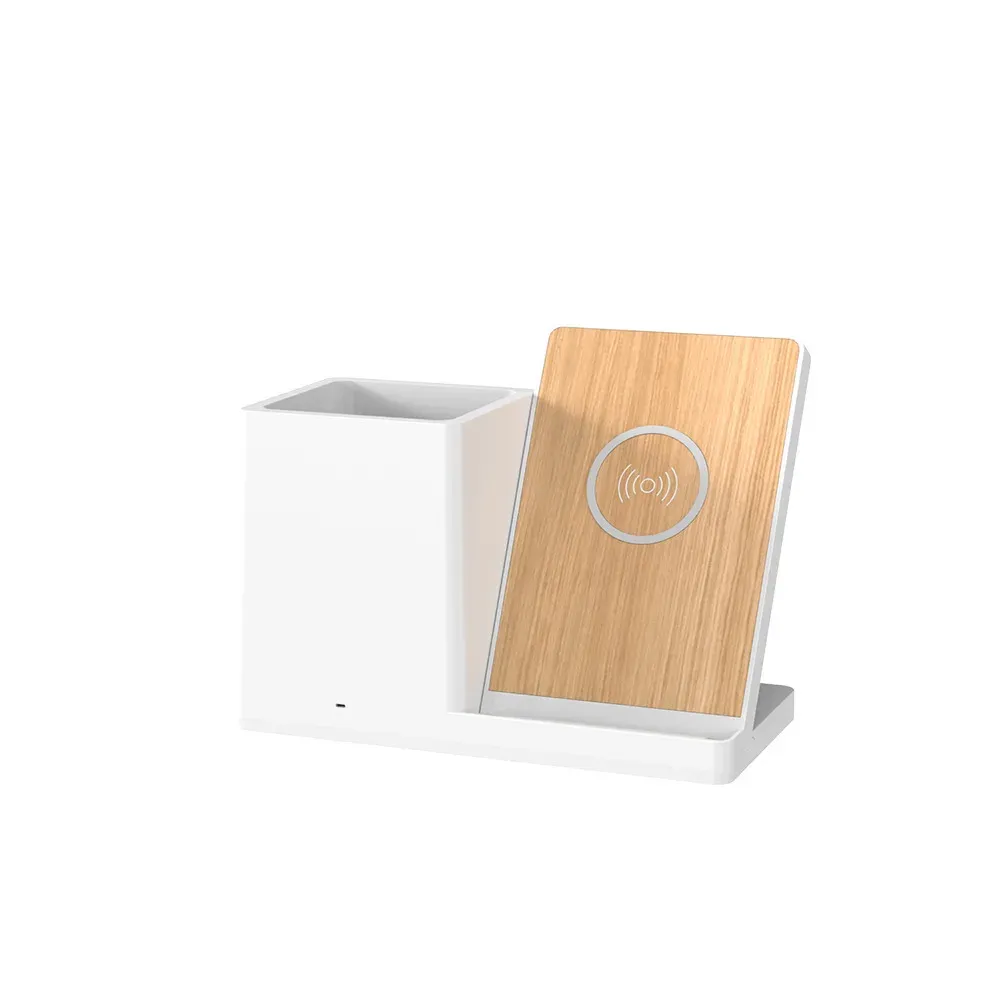
Corporate gifting has a plastic problem, and procurement teams know it. An accessory that looks and feels like disposable plastic undercuts the sustainability commitments a company publishes elsewhere. Eco-friendly promotional tech gifts have moved past the novelty tier for 2026: cable sets, wireless chargers, and desk accessories in bamboo, wheat straw, and cork now share the shortlist with apparel and drinkware, combining daily utility with a materials story recipients can see and touch.
This guide is written from the factory floor rather than the catalog page. NIZE TECH is a consumer electronics OEM/ODM supplier in Shijie Town, Dongguan, Guangdong, with over 15 years in the industry and more than 500 clients — promotional product distributors, corporate gift buyers, and brand marketing teams.
Bamboo, Wheat Straw, and Cork: How These Materials Behave
Most eco-friendly swag fails on material selection, not concept: the wrong substrate for the logo method, or a texture that disappoints in hand. Three materials dominate the category.
Bamboo
Bamboo is a fast-growing grass that regenerates from its own root system after harvest, which is why it is the default natural material in consumer electronics. In hand it reads premium: dense, hard, cool to the touch.
Durability comes from the whole structure, not the bamboo alone: thin panels are rigid and can crack under sharp impact, so ask how the factory joins bamboo to the inner chassis.
Bamboo takes laser engraving exceptionally well — a permanent, ink-free mark. Expect grain variation between units; perfectly uniform logos across thousands of pieces are not achievable on raw bamboo.
Wheat straw
Wheat straw is the stalk left after grain harvest. In a cable or charger housing you touch not raw straw but a composite — straw fiber blended with a polymer binder, injection-molded into shape. That process produces the matte, speckled finish buyers associate with sustainable-looking tech.
Feel and durability: lighter than bamboo, softer under the thumb, and more tolerant of drops and pocket abuse, one reason keychain cables favor it.
Color: the natural tone is beige; composites can be tinted, though deep saturated shades are hard to keep looking natural.
Claims: a straw composite reduces virgin plastic, but biodegradability depends entirely on the binder. See the FAQ before printing anything on the packaging.
Cork
Cork is the bark of the cork oak, stripped from the trunk without felling the tree; the bark regrows. In tech accessories it appears as wraps, panels, and grip surfaces.
Feel: soft, warm, naturally grippy, an advantage on desk items people pick up all day.
Durability: resilient under compression, but edges can scuff after years of hard use.
Logo work: cork debosses beautifully and engraves acceptably; fine text loses definition in the texture, so keep logos bold.
Eco-Friendly Tech Gift Categories Worth Shortlisting
Charging cable sets
Among bamboo promotional products, cables have the highest retention: used daily, carried between home, office, and travel. A 5-in-1 bamboo charging cable set with 3A fast charge and data sync consolidates every common connector into one branded piece. For volume giveaways, a wheat straw 3-in-1 multi-charging cable built onto a keychain trades capacity for portability at a friendlier unit cost.
Wireless chargers
A wireless charger earns long-term desk residency, the entire point of corporate gifting. Specify 15W fast charge as the baseline; slower pads frustrate on current phones. Combination designs multiply usefulness: a wheat straw 3-in-1 pairing a 15W wireless charger with a phone stand and a writing tablet covers three desk jobs in one footprint, while a 2-in-1 in bamboo, cork, and straw — a 15W pad plus pen holder — disappears into everyday desk use.
Speakers
Bamboo and wood-cabinet speakers occupy the premium tier of eco-friendly swag. Evaluate three things beyond the material: seam quality on curved bamboo (the most common defect), actual battery capacity versus the claim, and whether the tuning accounts for a denser cabinet. Treat speaker samples as non-negotiable: acoustics vary more between factories than spec sheets suggest.
Logo Methods on Eco Materials: Engrave, Print, or Deboss
Laser engraving. The workhorse for bamboo and cork. The laser burns the surface layer, leaving a permanent mark in shades of brown to charcoal — no ink to scratch off, no per-unit consumable. It is effectively monochrome, and the tone shifts with the grain. Setup is digital artwork rather than tooling, so it suits small and large orders alike.
Silk screen printing. Choose it when a specific brand color matters. Ink sits on the surface: good on smooth straw-composite panels, but it covers the texture of raw bamboo and cork. Adhesion on natural substrates should be tested with your actual artwork; order a printed sample and rub-test it before approving.
Debossing. A metal die presses the logo into the material, leaving a recessed, tactile mark. A one-time die cost makes debossing pay off on designs you will reorder; it shows best on cork and thicker composite panels, while hard, thin bamboo reveals less depth.
Custom molds. For programs that justify a unique product shape, an OEM/ODM factory can open custom molds for a housing, cable organizer, or packaging. It is the deepest level of customization available — and the one a catalog reseller cannot offer.
Where Eco Tech Gifts Perform Best
Employee onboarding kits. New-hire boxes have shifted from pens and notebooks to tech bundles. A bamboo cable set or a wireless charger sets the tone on day one; factory-built custom packaging turns three accessories into one designed unboxing.
Trade shows. Weight and size decide what survives the conference bag. A wheat straw keychain cable is light to freight, inexpensive to give, and small enough to be kept rather than abandoned.
ESG and sustainability campaigns. When your company reports on sustainability, the giveaway is part of the message. Bamboo, straw composite, and cork let the merchandise match the wording and give procurement something concrete to document.
Client appreciation. For key accounts, pair a debossed cork or bamboo charger with custom packaging — sustainable corporate gifts with logo branding that photograph well and read as effort.
Factory Direct vs. Catalog Distributor: What Actually Changes
Both routes can put a logo on a bamboo charger. The difference shows up after the purchase order.
Customization depth. A catalog reseller decorates an existing item; a factory can change it — material combinations, wall thickness, cable specifications, packaging structure. A brief like "bamboo body, cork wrap, debossed logo, uncoated kraft box" is a factory conversation.
Material traceability. When a listing says "wheat straw," ask what the composite actually contains and what documentation the factory can supply. The molding plant can answer; an intermediary usually cannot.
MOQ and lead time. Factories set MOQs per model and per level of customization, and typical industry ranges are wide. Treat any figure on a listing as a starting point and confirm the actual MOQ and production schedule with the factory before planning a campaign.
Compliance. Electronic gifts face different requirements by destination market. Confirm yours — safety, electromagnetic, and substance documentation such as CE, FCC, or RoHS where applicable — and ask the factory for matching test documentation.
FAQ
Are wheat straw products actually biodegradable?
Usually not — and any supplier claiming otherwise deserves scrutiny. Most wheat straw products are a composite of straw fiber and a polymer binder; the straw content reduces virgin plastic, but the binder determines what breaks down, and in most tech accessories the finished piece will not compost in a home bin. The defensible marketing wording is "made with wheat straw fiber" or "reduces virgin plastic," not "biodegradable." Ask the factory for the specific model's material composition.
What logo methods work on bamboo?
Laser engraving is the strongest choice: permanent, ink-free, and it works with the grain rather than against it. Silk screen is viable when the panel is smooth or coated and you need a brand color. Skip fine detail and thin lines, which the grain blurs, and plan for unit-to-unit tone variation — a factory promising perfectly uniform engraving on raw bamboo is overselling.
What is a typical MOQ for eco-friendly promotional tech?
There is no single number. MOQ depends on the model, the depth of customization (logo only versus structural or mold changes), and packaging. Standard models sit at lower thresholds than fully custom builds, and typical industry ranges are broad. Confirm the MOQ for your exact configuration with the factory before committing budget or dates.
Can I get samples before bulk production?
Yes — and on natural-material products you should insist on it. Request a sample with your artwork applied, not a stock sample, so you can judge what varies most: how the engraving, print, or deboss renders, plus finish, weight, and wall thickness. Confirm sample cost and shipping terms when you request it.
Get a Quote From the Factory
NIZE TECH is a consumer electronics OEM/ODM factory in Shijie Town, Dongguan, with over 15 years of experience and more than 500 clients across promotional products, corporate gifting, and brand marketing. We manufacture the bamboo, wheat straw, and cork accessories described above, apply logos by silk screen, laser engraving, or custom tooling, and build custom packaging in-house.
Send your brief through our contact page with the material, logo method, quantity, and destination market, and we will come back with options and a sample plan. Prefer to talk it through first? Message us on WhatsApp at +86 134 8092 2724 for quotes and sample arrangements.